was successfully added to your cart.

Cart

Tag

excercise program

Cardio And Burning Fat Myths

Basics Of Cardio And Burning Fat: 5 Min Friday Q & A

By Workout

Five Minute Friday Q & A

Are you stressed that your treadmill and skipping rope sessions that leave you dripped in sweat are still not helping you burn stubborn body fat?

How frustrating and demotivating is it when you try to follow fitness programs you found online or from a friend and don’t see results? You change it up each week and still feel stuck?

Are you the guy or girl trying to build lean mass & drop body fat at the same time and pissed that you never ever able to do both?

I get it, I understand, I once was skinny, weighed 147 lbs wet, and could never build any muscle until I learned how to eat and exercise for my body type.

I’ve put together the answers to the 3 questions from you (the viewer) based on cardio, body composition, and program design.

Q1- If I want to burn a lot of body fat what’s the best cardio program to do?
Q2- How long should I wait to change my exercise program?
Q3- Can I lose body fat while building muscle at the same time?

I like today Video please drop a 100% and if you interested in trying us for 7 days of FREE online training visit www.purefit.ca or DM us IM Interested

Thumb jan

3 Ways To Accelerate Your Training Just By Breathing Differently: 5 Min Friday Q&A

By Workout

Five Minute Friday Q & A

Do you think about breathing when you exercise? Do you actually take the time to think of the way you will inhale, hold and exhale your breath? Most people don’t and today I’m tacking an amazing 3 questions sent to us by our viewers on Breathing Tips.

#Q1 What is 3 (B) Breathing?

Stands for Brace Before Breath.
Its a form of Diaphragmatic Breathing that increases Intra-abdominal pressure and strength
Reduces risk of injury
Stabilizes Midsection/ Core
Improves Posture & Neutral Spine Position
Keeps Focus on braced truck region

#Q2 What is the REST -Pause Principle?

Intensity extending method praised by many for its strength and hypertrophy benefits
its when you do a specific amount of reps till failure, rest for 15-30sec, and then repeat for a # of sets until you reach the target rep. For example:
Set 1 8 reps till failure…rest 15 sec go to set 2
Set 2 4 reps till failure…rest 15 sec go to set 3
Set 3 2 reps till failure…rest 15 sec go to set 4
Set 4 1 reps till failure…rest 15 sec go to set 5
Set 5 1 reps till failure…stop

#Q3 What is the PRESS Pause principle?

Focus on the eccentric portion of the training (lowering phase)
Hold stretched out position with control, pausing with the full load then exploding up
Increases load, volume, and time under tension
Increases ROM, mobility and stability of the joint.
Jan 21, 2021

Eat Right Train Right for Your Bodytype eBook is Not Working Either

Signs You Are Over-Training & Adjustments Aimed For Recovery

By Workout

Coach D here again!

The number one question I am asked when approached by a new client is how many times a week do I need to train? Unfortunately, there isn’t a one-size-fits all answer. Honestly, it depends. It is hard to give an exact answer because several factors play a role: How intense is each workout? Are you warming up correctly? Are you following a nutrition plan? The thing we need to watch out for is over-training. While over-training can occur in a variety of different ways, it typically results from a combination of hormonal, neuroendocrine, and nutritional imbalances, secondary to heavy training & poor recovery.

The Signs of Over-training

Although it can produce positive outcomes, intense training completed too frequently without sufficient rest, can compromise a client’s muscular, endocrine, and immune systems, as well as psychological state. Signs and symptoms of over-training can be:

1. Underperformance
2. Extreme muscle soreness or stiffness during and in-between training sessions
3. Unintentional weight loss
4. Chronic fatigue
5. Swollen lymph nodes
6. Depression and/or anxiety
7. Sleep disturbances

When a client’s Over-trained

If over-training is suspected, a few simple changes can help promote recovery while minimizing stress. To assist in the recovery from over-training, we may suggest dietary modifications, as well as support the need for rest and off days during training.

1.  Dietary Modifications: Consuming a clean, well-balanced diet rich in anti-inflammatory Omega-3s, and antioxidants can help support recovery. We encourage our clients to add more fruits, vegetables, & some whole grains, to help manage inflammation

2. Rest: Five weeks of rest, which should include off and light training days, supports sustainable recovery. I don’t mean take 5 weeks off but drop the intensity, decrease the load your lifting or increasing rest times in between sets is something to note. Although clients will recover at their own rate depending on the severity at which they’ve over trained, steady and constant recovery should not be rushed.
I understand that we all have goals, and we are often willing to do most anything to reach those goals, but when we do not listen to our bodies that is when we can do real damage, Training 6 or 7 days in a row, has been shown to do more harm than good especially if it goes on for several weeks at a time.

I train for size and strength ( yes I know isn’t it too hard on your body to pound heavy weights for years?) Yes, but I do perform self Myofacial release exercises with Foam rollers, lacrosse balls and Thera massage guns. But you will start to break down muscle, and with no recovery days, you will never give your body a chance to build and repair. Maintaining a proper exercise schedule along with a good diet, will keep you on a path to your goals.

My suggestion for different types of goals and body types.

Ectomorph: Trying to gain size: 3-4 days per week max training and it should be 1-2 days on with 1 day off then repeating
Mesomorph: Trying to lose weight and tone: 4-5x week is sufficient and due to the fact that your not lifting with such high weight as a weight gainer you can do 2-4 days straight then add a rest day.
Endomorph: Trying to lose 20+ lbs & Improve Body Composition: I would suggest you move your body at min 5-6x week. The best combo is to do 3x week on then take one day off and repeat.

Remember we tell our kids that they need min 30-45min of exercise daily…what about us?

Contact us today by clicking HERE if you’d like to learn more about achieving your fitness and nutrition goals or if you feel you need any help setting up an In-Home Workout program or online assistance.

Pure Motivation Fitness 5 min friday Tips

Questions About Strength Training & Nutitrion: 5 Minute Friday Q & A

By Workout

Five Minute Friday Q & A

Hi guys happy Friday and I hope you are all excited to enjoy another beautiful weekend without any snow!!!

First & foremost thanks to everyone that sends us your most important questions that need answering and Id like to ask again:
*Send me 2-3 questions that you have and we can give you a shout out too*
Today’s post is about the following 3 questions:

1) What can I do at home to get stronger if I don’t have heavy equipment?
2) What should I eat after every exercise session?
3) What can we eat if we’re hungry late at night at 9 or 10 pm?

It’s important to know that you can always build strength even if you don’t have heavy dumbbells by training smart. Pre exhausting is the best method and can be done for any muscle group.

Consuming a protein shake or having a meal that’s easily digestible post-workout is the best for optimal absorption and recovery, and will assist with fat loss and muscle building

And when it comes to eating late at night remember…every meal needs a protein carb and fat regardless of the time, the only difference is that late at night you can replace the starchy carb or fruit carb with veggies to ensure your not spiking your blood sugar.

Please help me spread the positive word and vibes of health and fitness and sharing this with anyone you feel this post will help! Comment below and let me know if you have any questions that we can answer for you.

PURE Q A With Coach Dimitri

Questions About Alcohol & Swimming: 5 Minute Friday Q & A

By Workout

Five Minute Friday Q & A

PURE Motivation Five Minute Friday Q & A Episode 4 Today we are answering the following

1) Are alcoholic beverages good to have on the weekend since I will work out during the week?

2) Is it true that when buying new equipment or workout outfits it will motivate me to workout more?

3) Will swimming for 30 min be the same as working out for 45 min will I burn the same calories?

The underrated back exercise that we are not doing

The Underrated Back Exercise That We Are Not Doing

By Workout

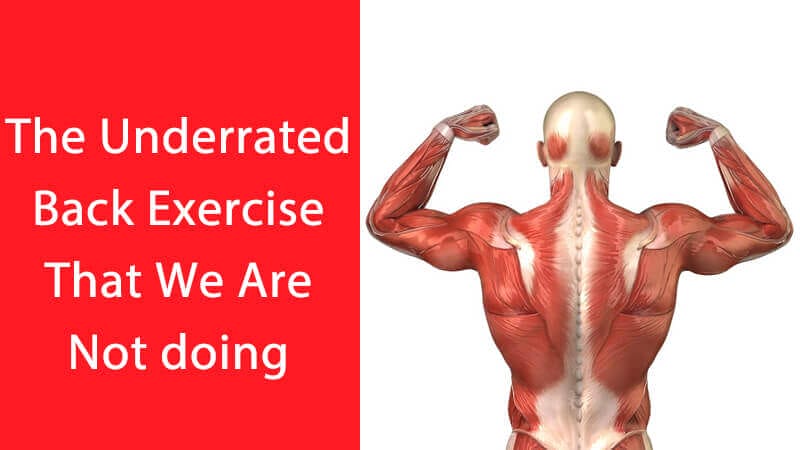
These days many of us have fallen in love with pushing exercises in our workouts. Exercises that train the chest, triceps, and shoulders, such as bench press and shoulder presses. However, without balancing it out with pulling exercises, it can lead to muscle imbalances.

Even with general pull exercises such as rows and pulldowns, the muscles in the upper back, lower traps, rear deltoids, and rotator cuffs are generally not targeted as much as they should be. The facepull is an excellent exercise to put in at the end of a pull workout to cover your bases.

The facepull is a simple, yet underrated pull exercise that is great for improving your posture, upper body imbalances, and to look better aesthetically. This is an exercise that most people overlook and generally don’t do enough.

The facepull can be done with a cable machine, or simply with a band. Use a rope attachment as opposed to bars as it will limit the rotation which is an important part of the exercise. Set the height high and so you have to pull the ropes down towards you. Come into a squared athletic stance without leaning backwards, and hold the end of the ropes with an underhand grip with the thumbs pointed backwards, this will allow for more external rotation versus other grips and heights. When pulling the rope, pull it down and towards the face, right towards the nose. Pull with the hands and not the elbows so that the hands reach back first, this is to ensure external rotation of the shoulders. Open up the chest and squeeze close the back.

Add this exercise to the end of your pull day workouts and try it out!

Activating the Foot

Activating the Foot

By Workout

The feet and toes play an important role in making sure that your ankles, knees and hips fall in alignment. When working out, walking and going up stairs, there is a tendency for people to roll to the outside of their feet and lift their toes.

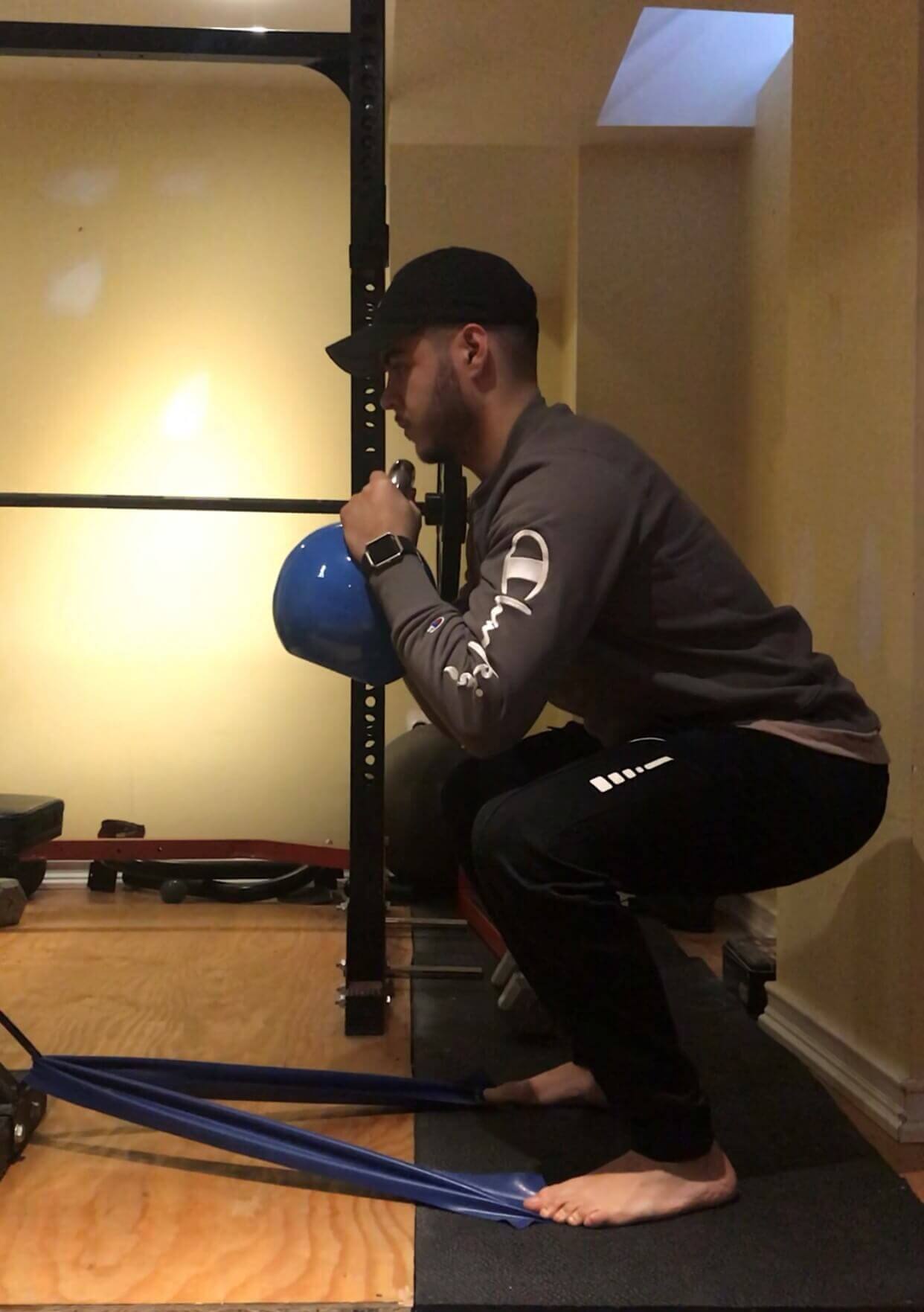
This results in a collapse of the knees and a shifting of the hips from side to side. A way to test for your big toes activation is by putting a band under your big toe and making sure to keep the band pinned down when performing squats.

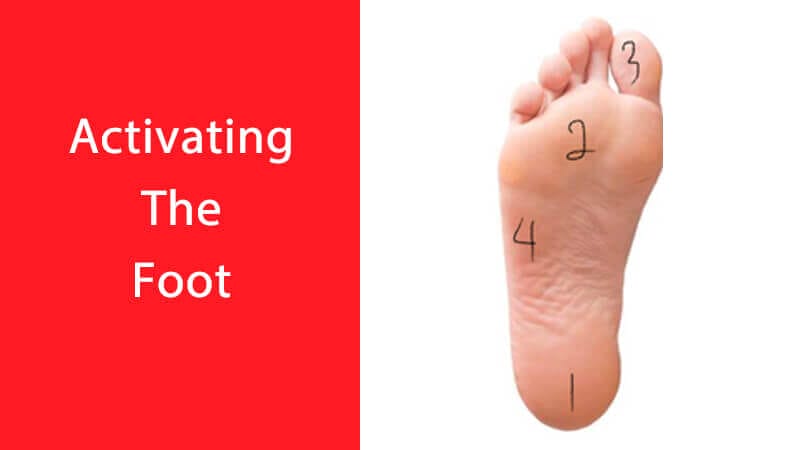
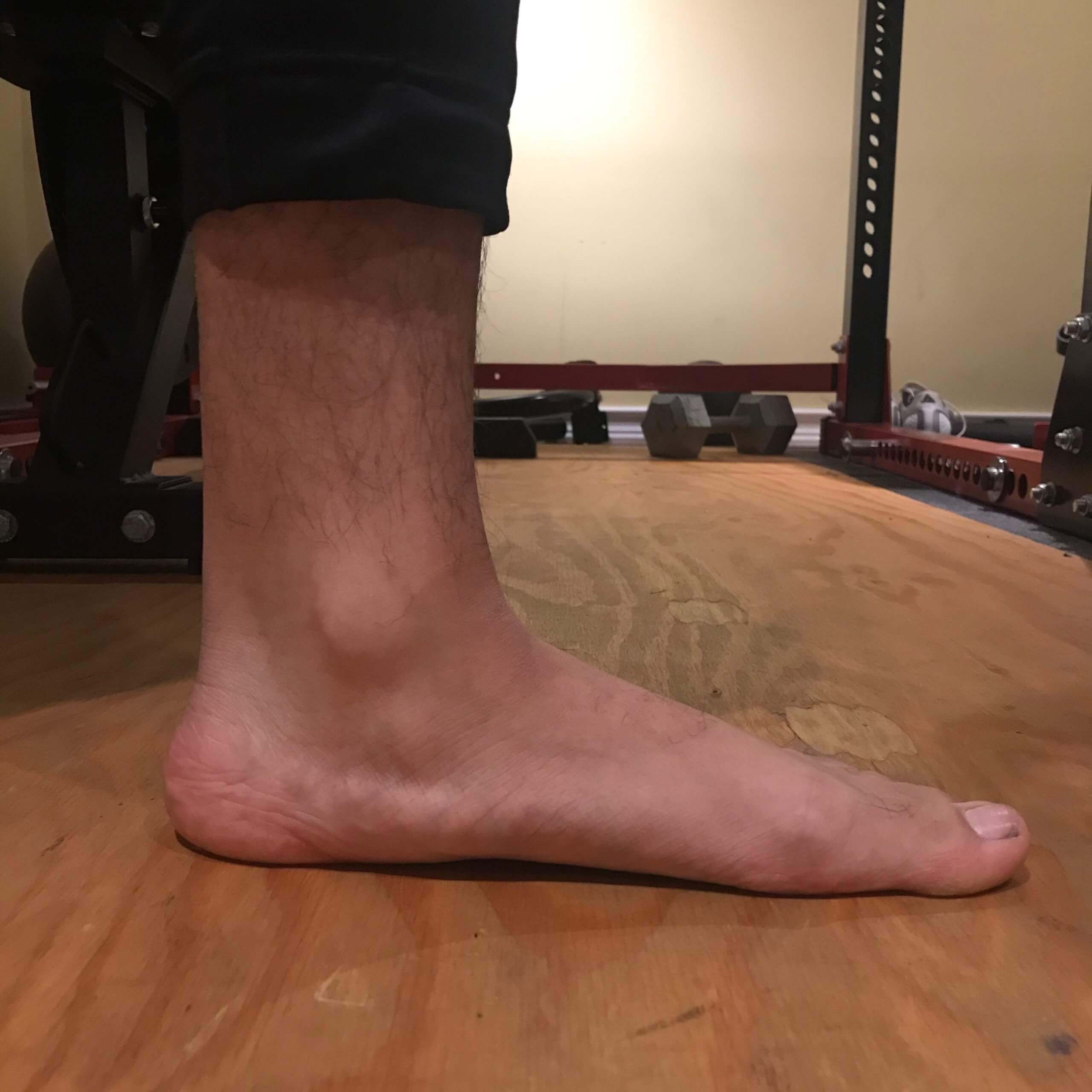
There are 4 points of contact that you should have on your feet when standing, squatting, lunging and deadlifting; your weight dispersed evenly across your (1) heel, (2) forefoot , (3) big toe and (4) a little bit of weight on the outside of your foot.

When properly driving the big toe into the ground, it will become easier to engage the glutes and stabilize the knees and hips.

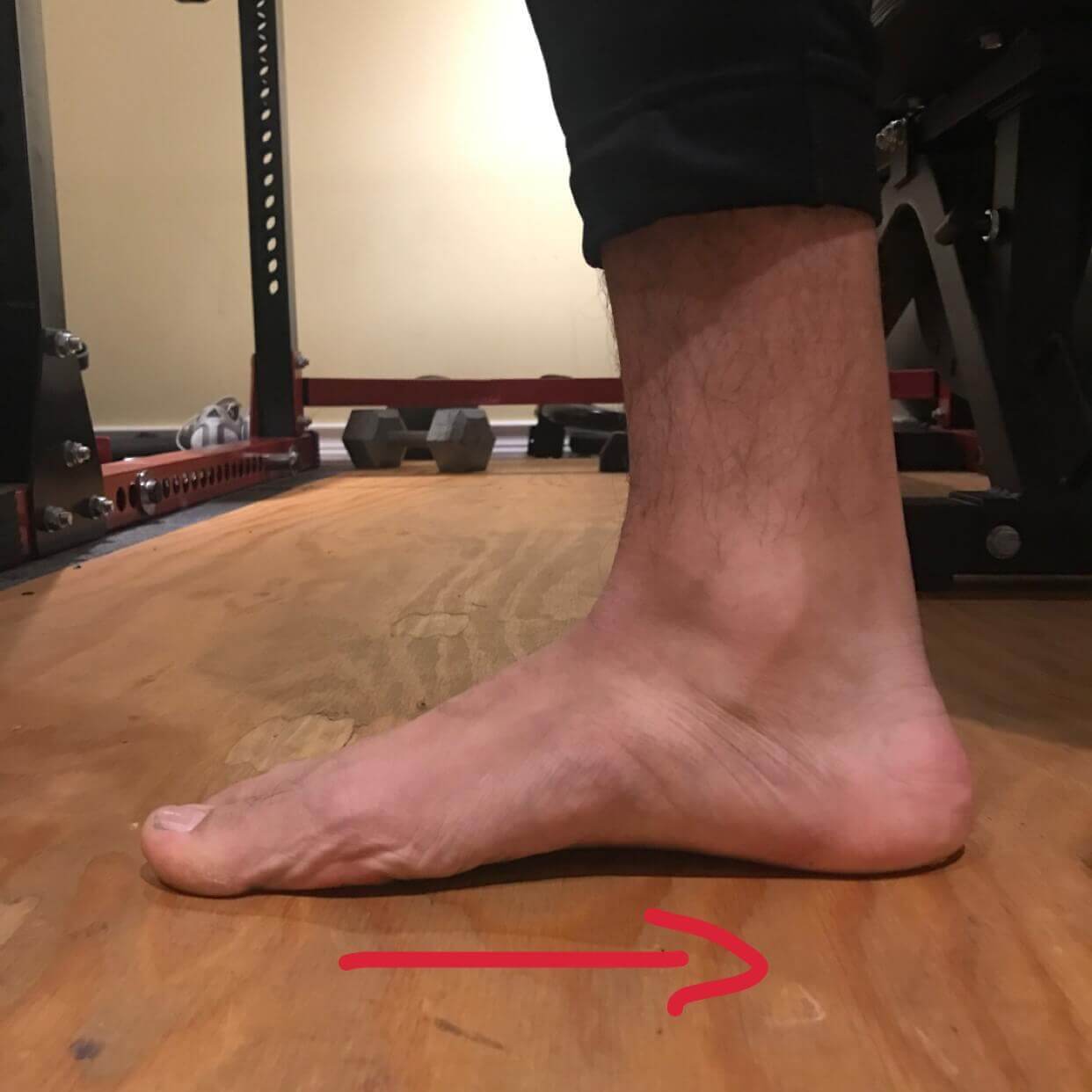
The feet and glutes work together to make sure that your lower half stay aligned. To properly activate your big toe, drive it into the ground, do not let the ball of your foot come off the ground. This will cause the foot to roll to the outside. Instead learn to activate your arch and lower leg to lift your arch upward and drag your forefoot and big toe back toward the heel maintaining contact with the ground.

Sciatica refers to back pain

Sciatica Back Pain & Relief – Pure Motivation Fitness

By Workout

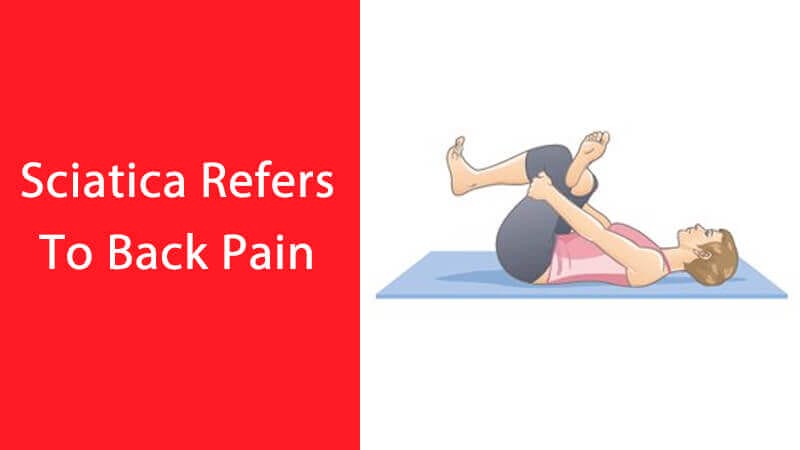
Sciatica refers to back pain caused by a problem with the sciatic nerve. This is a large nerve that runs from the lower back down the back of each leg. When something injures or puts pressure on the sciatic nerve, it can cause pain in the lower back that spreads to the hip, buttocks, and leg. There are steps you can take at home to ease the pain of sciatica. A heating pad or ice pack may be especially helpful. Apply the heat or ice for about 20 minutes every two hours. While sciatica is healing, try to remain active. Motion can actually help reduce inflammation and pain. Depending on your medical condition, certain exercises may not be recommended.

Try this: Reclined pidgeon pose will help improve flexibility of the hip and lower back which can give relief to your symptoms. Try going in and out of the stretch like you would an exercise. Try for 3 sets of 10 reps per leg a couple times a day.

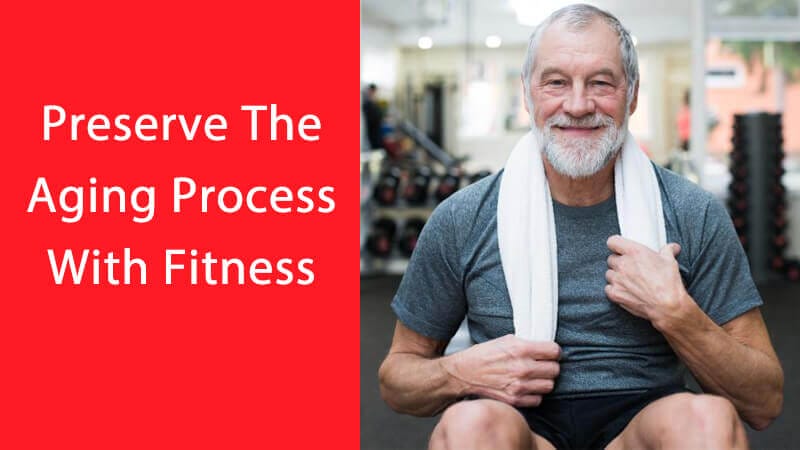
Preserve the Aging Process With Fitness

Prevent & Preserve the Aging Process With Fitness – Pure Motivation Fitness

By Workout

How are you? coach Dimitri here!

It’s time we open up a topic that not too many of us want to talk about and thats aging!  Yes I know, as much as we don’t like to talk about it, its going to happen its inevitable and like my favourite saying, ” there are 3 things we cant hid from in life” and thats  Taxes, Death and Fitness, eventually we will break down and get weaker.  However there is a way to prevent, prolong and ensure it doesn’t happen that fast.   Ive listed a few different methods of exercise that helps different age groups and saved the best one (Strength Training) for last.  Hope you enjoy this and if you do, forward it to a friend, co-worker or family member that you feel it can help.

Fitness and Aging

In September we celebrate grandparents, but the truth is we’re all getting older. And with age comes a natural decline in our bodies and our brains.  While we can’t stop the clock, there are ways to keep your muscles active and your brain sharp. Exercise has proven to reverse age related declines in our bodies and minds. 

First things first if you haven’t reached mid-life yet, maintaining an active lifestyle will ensure you’re able to get out of your chair when you’re 80. Studies have found that age related decline starts earlier than previously thought. At age 50 our balance, strength and endurance are already diminishing. By age 55 studies have found participants that did not engage in regular activity had thinking skills similar to those of a 90-year-old.

Here are few exercises and their anti-aging benefits.

Walking

You don’t need fancy equipment to implement this into a habit. Daily walking at least 30 minutes a day is proven to prevent or manage heart disease, high blood pressure and diabetes. It helps strengthen your muscles and bones and enhances your balance and coordination. If that’s not enough to get you up and moving, walking also helps protect against dementia, peripheral artery disease, depression, colon cancer and even erectile dysfunction. If you’ve reached a point in life where it hurts to move, find every opportunity to take a few steps. Your health improves with every step you take.

Swimming

If you suffer from joint pain jump in and swim. Swimming can help increase flexibility and reduce join inflammation. It’s other anti-aging benefits include lowering blood pressure and cholesterol levels as well as reducing your risk for heart disease and dementia.

Tai Chi

Tai Chi is a strength training exercise that includes a series of flowing movements. The beauty of Tai chi is that regardless of age or physical capabilities it can be done by almost anyone.  Tai chi helps build and preserve muscle while focusing the mind.  It helps improve bone strength, joint stability, cardiovascular health and emotional well-being. Because it targets leg strength, flexibility, range of motion and reflexes it helps improve balance and reduces the risk of falling, which is a major concern as we age.

Cycling

Research done with 125 amateur cyclists aged 55-79 had more muscle mass, less body fat and lower cholesterol levels compared to the 75 participants who were sedentary during the study. It also showed a younger immune system. The thymus glands that produces key immune cells called T-Cells shrinks at age 20 decreasing T-cell production. This same study found that the amateur cyclists’ bodies were producing just as many T-Cells as a younger person.

Strength Training (the Best of all types of exercise for any body type, any age, any level)

Starting at age 30 our body loses 8-10% of its muscle mass every decade, which also results in a decrease in your metabolism. Strength training using your own body weight or with light weights just twice a week can drastically cut those percentages to only 1-2% a decade. Strength training also decreases the risk of osteoporosis or bone fractures by increasing bone density and strengthening your tendons and ligaments. The improved muscle and bone strength decrease your risk of injury or falling and allows you to be more resistant to general aches and pains.

If you need help starting a fitness program and your not a member with us or for your family member just click on this link to schedule a Complimentary 1on1 Fitness Assessment & Movement Screening with one of our staff!

Despite your age or how you’re feeling it’s never too late to start. Our bodies were created to move so keep them moving. Incorporate cardio and strength training exercises into your daily routine to keep your body and brain young.

Until next time, remember that your ATTITUDE is Everything!

Dimitri Giankoulas
Fitness, Nutrition & Lifestyle Coach

P. S. Hope you enjoyed this tip and dont forget to follow us on Instagram & Facebook by clicking the links below.  We want to help everyone improve their fitness!

Click here for Instagram
Click here for Facebook