was successfully added to your cart.

Cart

Tag

excercise program

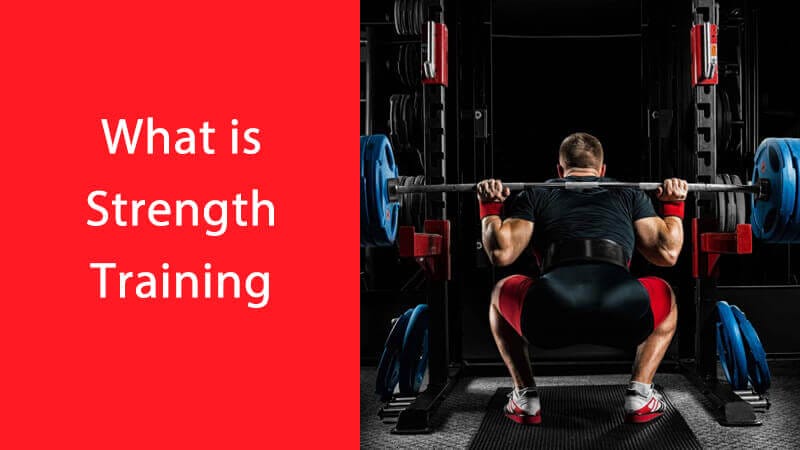
What is Strength Training

What is Strength Training? Why Is It Important?

By Workout

Today I wanted to touch on a type of training that, pound for pound is probably the most effective type of exercise. For many reasons that we will get to below!

Now, let’s start off. What is strength training?

Strength training is using muscular force against resistance. Muscles adapt to any type of resistance.

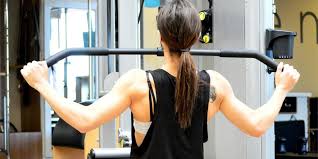
The resistance can be a heavy object, one’s own body weight, elastic resistance from bands, or other types of machine resistance from pulleys or hydraulics. The object could be a kettlebell, free weight, another person — anything that has mass.

Different types of equipment that can provide resistance :

Barbells

Dumbbells

TRX suspension training
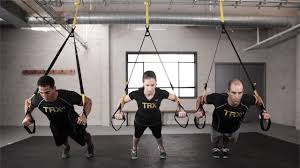
Kettlebells

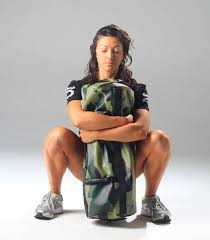
Sandbags
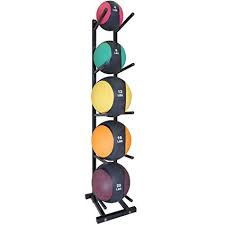
Medicine Balls
Resistance/Rubber Bands
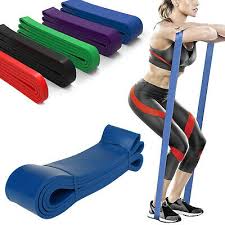
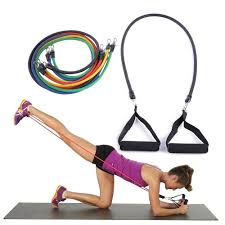
Resistance Machines
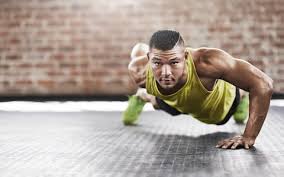
Calisthenics
Why is strength training so important?

-improving the ability to coordinate your moving parts

-improving how quickly you can generate force to move against the resistance

-building muscle tissue

-strengthening connective tissues such as tendons

-Improves glucose tolerance and insulin sensitivity

-Maintains and enhances muscle mass

-Maintains and enhances metabolic rate

-Improves bone density

-Decrease chance of injury

-Improves ability to engage in daily activities

-Decreases bad cholesterol levels

-Improves balance

-Improves self-esteem

-Enhances strength and endurance

-Enhances speed, power and agility

-Improves body composition

-Decreases blood pressure

-Improves aerobic capacity

When muscle metabolism is altered, it can contribute to the development of many chronic diseases. Maintaining muscle mass with strength training can help to prevent some of the most common health conditions, including obesity and diabetes.

Who can strength train?

In the past, strength training was primarily used by athletes to enhance performance and/or increase muscle size.

However, strength training is now recognized as critical to everyone’s health and fitness — regardless of gender, age, or ability. Leading health organizations, including the ACSM (American Council of Sport and Medicine) recommend regular strength training as part of one’s fitness regimen.

With a properly constructed workout program that is tailored to individual goals and skills, anyone can strength train: men, women, children, adolescents, older people and people with disabilities or movement limitations.

According to  the Journal of Clinical Interventions in Aging:

“Human aging results in a variety of changes to skeletal muscle. Sarcopenia is the age-associated loss of muscle mass and is one of the main contributors to musculoskeletal impairments in the elderly. Previous research has demonstrated that resistance training can attenuate skeletal muscle function deficits in older adults. Resistance training offers numerous benefits beyond improvements in muscle strength alone for older individuals. Several reports have demonstrated improvements in balance, functional mobility, stability limits, and fall prevention.”

So what should i do?

Firstly, it depends on movement quality. An assessment screen of an individuals movement is essential. Factors can be age, occupation, lifestyle and fitness/movement experience.

Ensure to get a professional to screen your movement quality and then provide the proper demand to meet your bodies capacity.

What is your Goal?

For strength and power, focus on complex, multi-joint, “movement plane” exercises such as squats, deadlifts, pull ups, rows, weighted jumps, etc. You can also use “functional” type exercises such as sandbag carries, sledgehammer swings, and tire flips.

**Volume, Intensity, Frequency and Type of exercises all are crucial

  • For muscle mass gain, you can use strength and power-type exercises (with medium loads) as well as targeted body part isolation exercises, such as biceps curls or triceps extensions.
  • For endurance (for sport or rehab), you can use strength and power-type exercises (with lighter loads) as well as targeted body part isolation exercises.
  • Many rehab-type exercises involve building endurance in specific body parts using very small movements (such as arm raises) with very light loads.
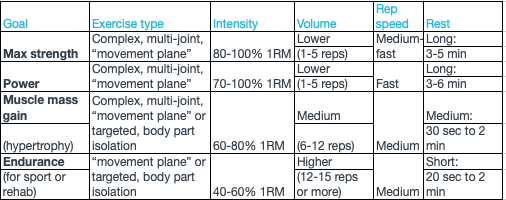
**1RM = 1 Repetition Maximum, maximum amount of weight that a person can possibly lift for one repetition

*sources from Precision Nutrition and the Journal of Clinical Aging

Stay tuned for more on strength training and how to make your workouts harder next this week!

Until next time,

Daniel

Interested in learning more about our programs? 

Let’s connect!

Book a phone call, tour or consultation in person.

 Check out my calendar below!

https://go.oncehub.com/DanielCecchino
*


Unsubscribe |Pure Motivation Fitness Studio | 1410 Major Mackenzie Drive Unit C1 , Vaughan, Ontario, L6A 4H6

5 Ways To Get Over A Plateau Period

5 Ways To Get Over A Plateau Period

By Workout

Your either one of our dedicated Spartan members,  or you’ve just started a healthy lifestyle journey and at first the weight was coming off quickly and then as you got into your routine the numbers tapered off, and then you’ve hit a wall and the numbers aren’t changing. Whether you’re looking to lose weight or bulk up a plateau is part of the journey. They’ll come a time where your body gets used to what you’ve been putting it through, and you’ll need to reevaluate and readjust to get the numbers moving. Here are a few ways to get over the plateau.

Trust me, Ive been there too and this is my 23rd year of training!  You figure that by now I would have the perfect formula figured out right? Well, not exactly.  The body is the most miraculous invention known to man and humans are the most adaptable species on the planet, so when our bodies begins to understand and get used to the way we shock it we need to provide it new stimulus and principles of exercise, eating and intensity to break out of the plateau period and today Ive put together 4 of my easiest ways to do so.  Hope you enjoy them!

1#  Calorie Adjustments

If you’ve been losing weight your body requires less energy to fuel the new you, however, on the other end of the spectrum if you’re looking for more muscle your body will need more to fuel the new muscle mass you’ve acquired. Revise your caloric intake based on your goals. Whether your goal is to lose or gain, make sure you’re implementing more fresh foods and less processed and begin to Log your food using this food journal and lets look at what types of areas your either under eating ( as in not enough protein every 3-4 hours) or over eating (as in eating too many fruits, grains or portion servings).  The body is unique and will only adjust or do what you tell it to, just like a computer we are the ones responsible for the outcome so dont get upset when your starting to stick or plateau!

2#  Change Up Your Routine

{{first_name}}, once you’ve established a routine that works it can be hard to stray from what’s been working, but if you’re not seeing the progress you’re aiming for it’s time for a change.  Chugging away on a treadmill or elliptical machine might have started your weight loss, but try incorporating HIIT, High Intensity Interval Training, to burn body fat.  If you’ve been pumping the same iron and your guns are no longer blazing you can change up your sets, rather than volume focus on intensity so instead of 3 sets of 10, do 10 sets of 3.

Try doing active rest principles (yes I said active rest…like skipping in between sets, slamming a heavy ball against a wall or floor or try pushing a heavy sled with weight in between sets.  You can also simply add an abdominal or core exercise in between every set you do as well if you don’t have access to a sled, or brick wall).

#3 Protein, Protein, Protein

Protein is essential for weight loss or weight gain.  Eating proteins burns more calories during digestion and contains an amino acid, leucine, that initiates your body to burn fat.   Didi also mention it gives you more satiety (feeling full) when you add it to every meal.  Just like your workouts your body can get used to what you eat. If you’ve been sticking to skinless, boneless chicken and eggs as your protein sources, change it up. Incorporate cod, beans, turkey, or quinoa into your meals.  Try adding 1scoop of protein powder + 1cup of water (or almond milk) +ice + 1tbsp of peanut butter and some spinach to your in-between snacks mid day between breakfast and lunch and then again between lunch and dinner 1!  Your body needs more protein to build stronger muscle mass as you train and improve so if you dont supply it how the heck and you break your plateau?

4# Take a break!

This may seem crazy {{first_name}}, but going full steam ahead on your goals is great, but sometimes your body needs a break. Take a week off and let your body reset. Taking a break isn’t just good for your body it’s good for your mental health also.  Despite what you may be thinking, taking a week off isn’t going to mean you’re back at square one. Studies have found there isn’t much change in a week. If you do decide to take a break, continue to pay attention to what you’re eating, don’t go crazy and fill up on sugar and fat, but do treat yourself. When you get back to the gym you’ll feel like a new person and you’ll be ready to work harder.

 5# Analyze what your actual doing right and wrong!

Sometimes we place too much stress on the body and expect it to just change, sizzle off unwanted fat and pump up with new lean muscle mass despite all the junk we sometimes put inside of it or the lack of change or new stimulus we provide.  Log your ACTUAL workouts on a calendar, are you actually sticking to the frequency you say are?  Log how high your intensity is with your heart rate monitor? Log if your doing any additional cardio on the off days? Log if your routine has been the same for more than 4-5 weeks?  Log how many times you drank wine in a week? How  many times you had ice cream 3 hours before bed… The list goes on but if you cant log what your doing you cant track or change anything.   Greg Glassman the founder of Cross Fit said the best line that I always quote,  What cannot be logged or measured cannot be defined!  Let that one sit with you today!

Bottom line…Plateaus happen, it’s a part of the journey. Know your numbers and you’ll know when things are starting to slow down. If you’ve tried making changes and still don’t see a difference talk to your doctor to make sure there are no underlying concerns.

Just remember your ATTITUDE Is EVERYTHING,

DIMITRI GIANKOULAS
Owner

P.S. if you feel you or someone you know needs a push, needs some motivation, or needs a slap of PURE Motivation forward this email to them or have them try our amazing 15 Day Trial by clicking here

*