was successfully added to your cart.

Cart

Tag

low carb

Extreme Diets are not a great strategy

Top 10 reasons to Avoid Extreme Low-Calorie Diets

By Fat Loss
Extreme Diets are not a great strategy

This week I wanted to dig deep into Extreme low carb diets and how the body cant tell the difference between Dieting & Starvation! Hope this info helps you not feel that you need to follow low calorie restricted diets and that eating to burn fat and build muscle should be your goal!

During long periods of starvation, your body slowly feeds off itself for energy, burning through fat stores, then muscle and eventually vital organs. If you continued to burn calories at your normal or higher than normal rate while your food intake fell far below normal, you would quickly exhaust your reserves of stored energy and die soon after your food supply was cut off. Your body’s starvation response keeps you alive longer.

When your body senses calorie deprivation (as some people try to diet with chicken/fish and veggies alone and live off 5-25g or less carbs per day), your survival responses kick in, even though a diet is not a life or death situation. Your body tells itself, “It looks like this is all the food you’re getting for a while, so you’d better stop burning so many calories, start conserving your energy, and increase the drive for finding food.” The longer this happens the more your body and brain begin to slow down the rate of metabolism and the rate at which you ultimately can build muscle or burn body-fat.

The negative side effects of very low-calorie dieting include increases in hunger and food-seeking behaviours, drops in energy or activity level, loss of lean body mass, decreases in metabolic rate, and problems with hormones like hair loss and deficiencies.

Because of this Im going to provide you with the 10 Reasons To Avoid Extreme Low-Calorie Diets! Be sure to share this info with anyone you know how may benefit.

1. EXTREME DIETS INCREASE HUNGER AND FOOD CRAVINGS:

It’s almost impossible to stay on a diet when you’re battling voracious hunger and all you can think about is food. The urge to eat can also be psychological or environmental. You tend to want what you can’t have, so if your diet is too low in calories or it sets too many rules about what you can’t eat, the feeling of deprivation triggers cravings and binges. It’s worse when you’re surrounded by temptations and eating cues all day long.

2. EXTREME DIETS SLOW DOWN YOUR METABOLIC RATE:

Your basal metabolic rate is the number of calories you burn at rest every day. When you lose a lot of weight, you burn fewer calories simply because you have a smaller body. But calorie restriction causes your metabolic rate to decrease even more than a drop in body weight would predict. This is known as “adaptive thermogenesis” and it’s one of the reasons why progress slows over time and why it’s harder for most people to lose those last stubborn 10 to 15 pounds

3. EXTREME DIETS MAY INCREASE THE RISK OF MUSCLE LOSS:

Since muscle burns calories and muscle is extra weight you have to lug around, getting rid of it is an easy way for your body to burn less. Lean people who already have low body fat are more likely to lose muscle than overweight people, but it can happen to anyone. Dieting without resistance training can cause 30 percent to 50 percent of your weight loss to come from lean tissue. The risk of muscle loss or catabolism is higher when most typical female diets /meal plans don’t even have .7-1g p/pound of protein per bodyweight!

4. EXTREME DIETS DECREASE NON-EXERCISE ACTIVITY THERMOGENESIS

Non-exercise activity thermogenesis, also known as NEAT, is the scientific name for all your physical activity throughout the day, excluding formal exercise. Basic examples of NEAT are:  casual walking, shopping, yard work, housework, standing, pacing, and even little things like chewing, changing posture, and fidgeting. Over time, Studies by Dr. James A. Levine at the Mayo Clinic found that when you cut calories, your NEAT level drops. Many people already know that low-calorie diets make them lethargic. Unless you consciously counter this tendency by keeping yourself active, your weight loss will slow down automatically as you keep dieting.

5. EXTREME DIETS DECREASE YOUR ENERGY AND WORK CAPACITY:

As a general rule, low-calorie diets are not conducive to good workouts or an active lifestyle. One of the first signs of undernutrition is loss of energy and the ability to sustain intense training. Without enough fuel coming in, you’ll fatigue faster, your strength will suffer, your performance will plummet, and your results will be compromised. When people hardly eat to lose fat they can hardly train and thats not positive for you!

6 EXTREME DIETS DECREASE THYROID HORMONES:

Since thyroid levels help regulate your metabolic rate, maintaining thyroid function is important for successful fat loss as well as overall health. Endocrinologists have measured reductions in triiodothyronine (T3) and thyroxine (T4) levels as quickly as one week after starting a very low-calorie diet, even before there is a decrease in body weight.  You need that calorie deficit to burn fat, but cutting calories too far—especially when you slash the carbohydrates too low— can wreak havoc with the very hormones you need working at peak efficiency.

7. EXTREME DIETING DECREASE THE HORMONE LEPTIN:

Leptin is a hormone produced  primarily in your fat cells that also plays a major role in regulating metabolism and body weight. Leptin is the hormone that says “its ok to stop eating we are full”. If food intake or body fat stores go down, your leptin levels drop. When leptin is low, it signals your brain that body fat reserves are declining and starvation is impending. This is why leptin is often called the “anti-starvation hormone,” and it may be the hormone that triggers the entire cascade of starvation responses, from increased hunger to reduced metabolism.

8. EXTREME DIETS INCREASE THE STRESS HORMONE CORTISOL:

Cortisol is a catabolic (muscle-wasting) hormone produced by your adrenal glands in response to various types of physical and mental stress, including dieting. Research has shown that cortisol is inversely related to calorie levels.  If starvation dieting and other stressors are causing a hormonal imbalance, you need to address those issues rather than trying to treat the symptoms.

9. EXTREME DIETS DECREASE TESTOSTERONE:

Testosterone also takes a hit when you cut calories too much. This makes perfect sense from an evolutionary point of view because if you can’t even feed yourself, you’re in no condition to bear and feed offspring, are you? In a study from the Journal of Applied Physiology, Army Rangers who were fed only 1,000 calories a day under conditions of stress, sustained wor kload, and inadequate sleep experienced a drop in testosterone that approached castration levels. research says that a conservative calorie cut of 20 percent below maintenance level won’t affect testosterone.

10. EXTREME DIETS INCREASE THE CHANGE OF WEIGHT GAIN:

Almost everyone loses weight at the beginning, but later on, when the weight loss slows down and th e hunger pangs intensify, most people give up. Even worse, they end their diet with a binge. This up-and-down pattern of weight loss and regain is known as weight cycling, and many people suffer through this for years or even their entire lifetime. Not only is it unhealthy, but with each cycle your metabolism becomes less efficient and you may actually get fatter more easily while eating less food than before.

Remember extreme dieting happens all the time, its not just when when people begin fitness programs but this happens all the time when people eat poorly over a holiday and then goes 2-3 weeks eating not carbs and trying to cut weight fast.

We help professionals & parents with kids shed fat and build muscle without having to do starvation diets or endless cardio sessions. If you’re new to exercise or seeking that athletic, active and lean physique and not sure where to start? Click the box below to set up a free Discovery Call to help guide you through, What your Body Type is and what’s the best program and nutrition for you!

Who is Pure Motivation Fitness?

  • We help busy business professionals & stressed moms & dads look better naked, regain their work-life-family balance & improve sex drive in less than 90 days.
  • We teach you to eat & exercise for your unique body-type.
  • No more obsessing about fitness
  • No more fad diets

Are You Ready to Take Action and Get Started? Have A Question About COVID Safety or Pricing?

Take charge of your fitness & nutrition today. Click the BUTTON BELOW to schedule a complimentary Discovery Call and together we will plan your 90-day of body transformation.

Pure Motivation Blog for Body Type

ENDOMORPH: The Body Builder & Their Struggle With Weight Loss?

By Body Type

Are you the type of client has has always struggled with weight gain or weight issues? Are you the type of male or female that no matter how hard you work out, not matter how clean you try to eat or no matter how far away you try to stay from sweets & junk food that gaining weight comes so easy for you that its almost frustrating to even want to eat anymore?

You’ve tried, low carb, medium carb, no carb, soup diets, chicken and salad diets and sometimes even just skip meals because you feel its more satisfying to forget about eating and maybe the weight will burn off on its own through fasting?

Ive seen this before, Ive witnessed this before and our team and I have helped thousands of members over our 15 years of operation break this weight gain phenomenon and made sense of it all to our many Endomorphic members that have sometimes never hard of this body type philosophy and the challenges that can affect your fitness journey when not armed with the right knowledge and understanding of your unique body type.

BODY TYPE = THE ENDOMORPH (HEAVY SET BUILD)

An endomorph has a thicker bone structure and a tendency to have wider shoulders to waist ratio, appear overweight and often lacks definition. Strength and size come easily for endomorphs who are generally softer and rounder and tend to store fat easily. Endomorphs tend to have curvy, fuller figures and struggle to keep their body-fat percentage in check.

Endomorphs have unforgiving metabolisms. Endomorphs have to make a conscious, calculated effort to not over consume calories or be in a caloric surplus. Exercise, such as walking or running, must become a part of the endomorph’s weekly (or daily) routine.

Exercise is an absolute must. To maintain an optimal body composition and efficient metabolism, the endomorph must train hard both with cardio and weights as well as strive to enjoy more functional daily activity.

Endomorphs most commonly, though not always, have larger frames with medium to large articulations (joints), smooth round contours with waist and hips dominating over chest coupled with significantly high muscle mass.

Endomorphic individuals often tend to be more sluggish and lack energy due to a hypo-reactive (very slow) metabolic rate (BMR). They store excess calories as fat much faster than the other two body types due to the slower metabolism

ENDOMORPH TRAINING:

Even though people with this body type may have a harder time maintaining a healthy weight, with a good diet and regular consistent exercise there is no reason why they cannot have a slim appearance. As extra weight is a key problem area for individuals with this body type, the first thing to consider when working out is a program which burns calories, in conjunction with a low calorie diet.

Cardio type workouts are generally considered to be the most effective either immediately after exercise, first thing in the morning or on non weight training days for this, however if an individual is overweight, it may be necessary to choose a cardio activity that is low impact such as swimming, walking/ jogging, rowing or cycling, at least at first, to avoid unnecessary strain on the joints.

Training immediately in the morning or mid day is best for your body type as you get your body’s natural furnace going early on to burn calories throughout the day. If you cannot train until the evening, make sure you do so at higher intensities. For most workouts, weight training should be kept at the high range utilizing body weight movements along with lighter free weight compound movements.

Cardio is an endomorphs best asset as you will need to be active five to six days per week. High intensity cardio (otherwise known as metabolic conditioning) will need to be a component of virtually every session.

Many Endomorphs have been successful by splitting their workout sessions to morning cardio on empty stomach alongside a mid-day or evening workout.

Inactive endomorphs can start with 20 minutes per day pushing up to 45 to 60 minutes after a few weeks. The longer and more intense your bodyweight training and cardio workouts are, the greater the fat lose.

Vary workouts training in the 15-20-or 25 rep range, resting very little with a 30-60 second maximum. You may also train with time based repetitions instead of counting reps such as doing 3 exercises back to back for 30 to 45 seconds, even 1min long to burn maximum calories and shock the body.

Endomorphs will plateau quickly so they should add sprints, kettlebell swings, jump rope, cycling, classes and martial arts to their training programs regularly. Endomorphs benefit from full- total body workouts four times a week.

“The challenge for most Endomorphs is that they need to ensure they are active more than the other body types (min 4-5x week) regardless of how well their nutritional intake or program is. Exercise & movement are the catalysts to a faster metabolism.”

MESOMORPH NUTRITION MACRONUTRIENT MAKE UP:
35% PROTEIN 25% CARBS 34% FATS

We help Busy Business professionals & Stressed Moms & Dads look better naked, regain their work-life-family balance & improve sex drive in < than 90 days by teaching them to eat & exercise for their unique body-types without having to obsess about fitness, be stuck dieting & eat 2 dinners every night!

If you’re interested & ready to take action and get started with taking charge of your fitness & nutrition, click the bottom below to schedule a complimentary Discovery Call, so that together we can plan your next 90- days of body-fat transformation success.

Endomorph thumbnail2

ENDOMORPH: Fat Loss Tips

By Body Type

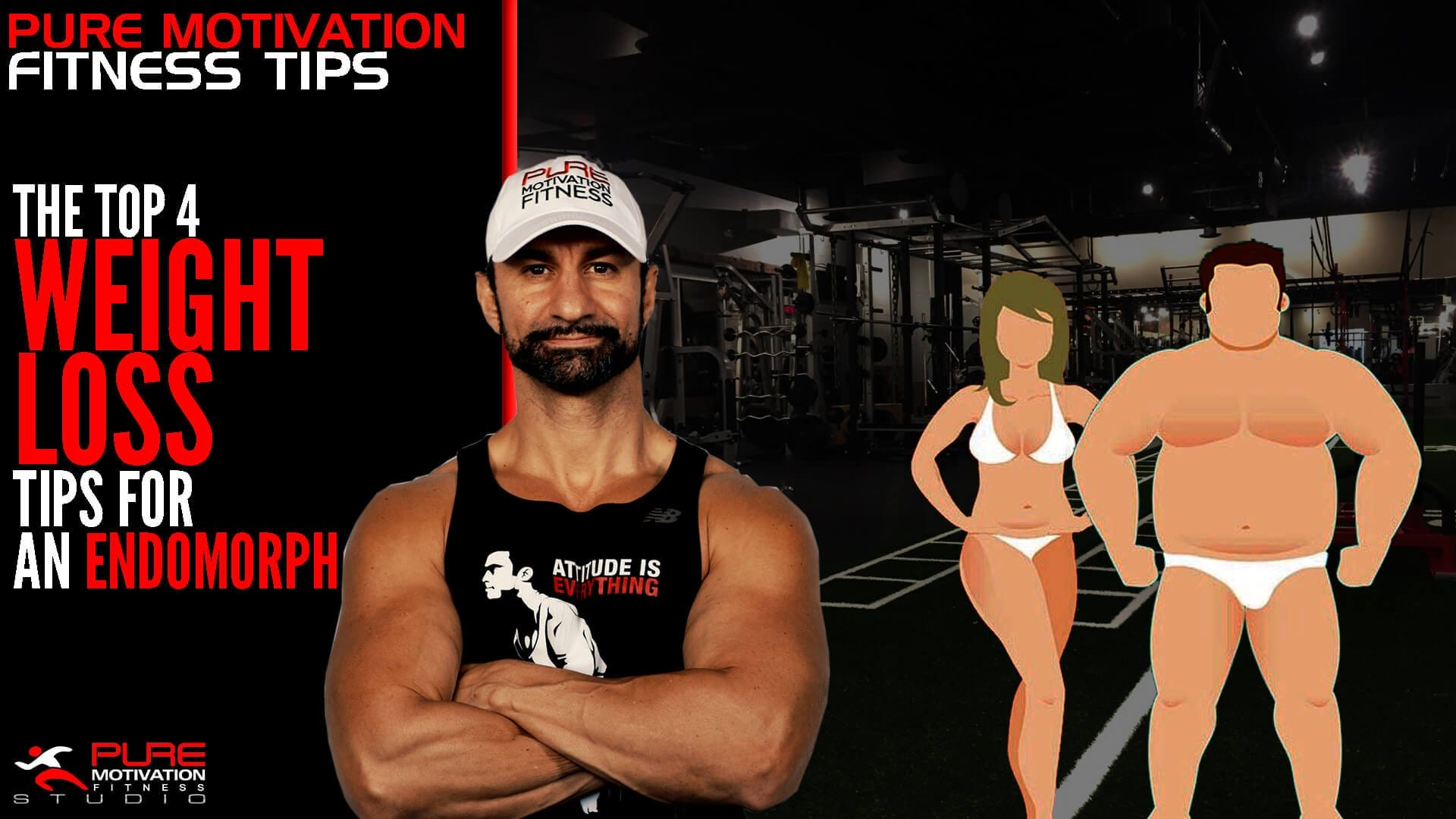
Top 4 Fat loss Training Tips For The Endomorph

1. Do exercises using your body weight
2. Do compound exercises
3. Combo training
4. Get moving!

Want to learn more about the endomorph body type?

💪 LEARN MORE ABOUT YOUR UNIQUE BODY TYPE? 💪
1️⃣ What is an Ectomorph? Learn the 5 Best Exercises for you!
🎬 https://www.youtube.com/watch?v=yn6B-…​
2️⃣ What is a Mesomorph? Learn the 5 Best Exercises for you!
🎬 https://www.youtube.com/watch?v=xGTwM…​
3️⃣ What is an Endomorph? Learn the 5 Best Exercises for you!
🎬 https://www.youtube.com/watch?v=tHFN8…​

PURE Q A With Coach Dimitri

Listener Questions About Workouts & Macronutirnts: 5 Minute Friday Q & A

By Nutrition

Five Minute Friday Q & A

Hi guys welcome to another edition of 5 min Friday here are today’s 3 questions and my answers to them.

1. is it healthy to feel sore two days after a workout?
2. if I want to lose weight should I cut out carbs from all my meals?
3. is it better to count calories or macronutrients

be sure to dm or email us your questions so we can answer them during our Friday segments!

Middle Age Spread

Middle Age Women Fighting Slow Metabolism – Pure Motivation Fitness

By Nutrition

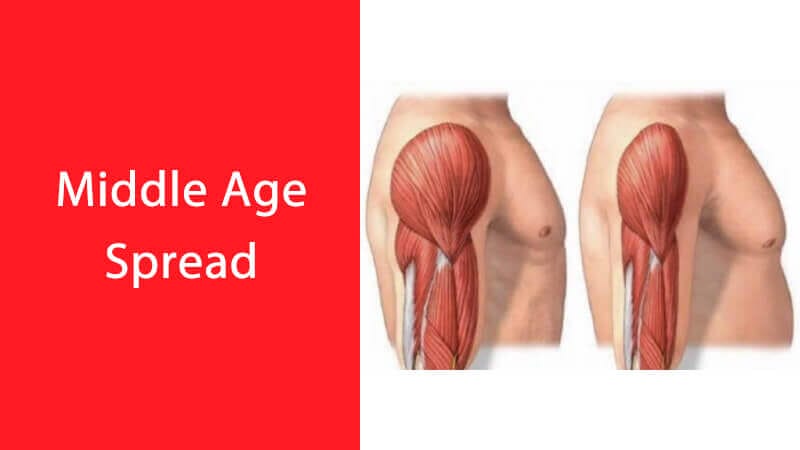
Many women, especially as approaching middle age may have heard the phrase ‘middle age spread’. Well unfortunately there is some truth and science to back the phenomena.

As we age there is a natural loss of muscle mass, about 1/2lb yearly after the age of 30 and up to 1lb yearly after the age of 50. That alone will start to decrease metabolism, but if the wasn’t enough as women approach and enter menopause they experience reduced estrogen levels, and lower quality of sleep. Add these three culprits together and its a recipe for a slower metabolism, increased body fat, particularly abdominal fat, and hence ‘the middle age spread’. This will occur if you maintain your lifestyle and don’t make some changes accordingly to try to counteract the reduction in metabolism.

This can be done by three somewhat easy ways, although not always easy to execute, you need to to try harder than when you were younger, sorry ladies. Firstly, eat less, this doesn’t mean starvation or fad diets, you need to check in with your portions, you are eating for a lower number of metabolic calories needed through the day so adjustments need to be made, and ensure you are getting quality macronutrients, complex carbs, proteins and healthy fats. Also watch the sugar, alcohol, and fat intake, these bad boys pack a large calorie punch and not reducing these will derail your efforts. Secondly, move more, easy right? If you don’t strength train, start, if you do, add some more. Just increase your calorie expenditure through both aerobic and anaerobic exercise, from what you were doing before. Lastly, focus on improving quality of sleep, lack of or broken sleep causes weight gain. The increased exercise and cleaner diet should help, and adding relaxation therapies like yoga and meditation have been shown to improve sleep. If needed you might want to try natural supplements like magnesium that may help somewhat.

So yes ‘middle age spread’ is real but can be counteracted with some changes to your lifestyle; eat less, move more, sleep well! These changes will be beneficial for your overall health as you age, reducing risk of heart disease, type 2 diabetes, and some cancers.

Do Vegetarians lack in Nutritional Macros

Do Vegetarians lack in Nutritional Macros?

By Nutrition

I’ve written this email with the intent to showcase the positive effects, discuss some myths and give back some information about Vegetarian Diets despite me personally being a full out carnivore and prefer a mixture of a Mediterranean Diet.

As a fitness coach for over 23 years my main concern when it comes to helping my members follow or stick to a diet is that FEMALEStry to maintain a min or average of .8 -1g or protein per pound of body weight and for MALESto consume 1-1.5g of protein per pound of bodyweight.  Sometimes even suggesting 1.7-2g of protein per pound of bodyweight depending on the size and height of the athlete and how much lean mass they have.

Say what you will about vegetarianism, but the truth of the matter is more and more people are making the change to a plant-based diet, even if it’s only one day of the week hence meatless Monday.  October 1stwas World Vegetarian Day, but the day has been expanded to Vegetarian Awareness Monthto celebrate and highlight the benefits of a plant-based diet.  Stereotypes come with every “diet”, but vegans and vegetarians face some misconceptions that are held with popular beliefs. Here are a few myths we are busting  up about vegetarians.

Myth 1-Vegetarians and Vegans don’t get enough protein?

Despite the stereotypes associated with vegetarianism and its many forms, if you want to be a bad ass and think about it plants provide ten times more protein per acrethan meat.  Which means vegans and vegetarians have a variety of protein sources including: beans (black, soy, garbanzo, etc.), nuts (almonds, walnuts, cashews) quinoa, leafy greens, tofu, tempeh, seitan, buckwheat, seeds (hemp, pumpkin, etc.) jackfruit.  Plus, plant-based proteins contribute to a more heart healthy diet because they contain more fiber and less saturated fat than meat.

However, if a client or person wishing to shed bodyfat doesn’t understand how their mesomorphicor endomorphicmetabolism and body types contribute to eating a diet that is typically higher in carbs and less in protein they can spike blood sugars very easily and store more sugar to fat than they want to.  That’s why you should always mix a plant based protein with a carb either something high in fiber (fruits & veggies) or a healthy nutrient dense measured out grain based carb (quinoa, oats, wild /brown rice, grain crackers ect) and a healthy fat (avocado, olives, cheese, nuts, seeds, nut butter, salmon, sardines) so that you eat all 3 macronutrients tougher and slow down the release of the carb you choose to not spike blood sugar.

Myth 2- If you don’t include dairy in your diet you have weak bones?

Most people think of vegans and vegetarians as waifs or skinny and weak because they think:  A – they don’t get enough protein and B – because they don’t get the nutrients from consuming dairy products. First, not all vegetarians are against dairy. Vegans don’t eat anything that comes from animals including dairy and eggs, but most vegetarians are Ovo Lacto Vegetariansand consume eggs and dairy. So if anything I highly recommend anyone who is Vegetarian to follow this slightly less restrictive form as you can beautifully consume higher amounts of protein per pound of bodyweight male and female and thus never be catabolic (where your losing lean mass due to being more active and consuming less protein than your body requires or are deficient.   Someone that is an Ovo Lacto Vegetarian can for example have fresh omelettes with 4-5 whites and 1-2 yolks a few times per day and consume a total of 25-45g of protein per serving!  Add some delicious burrata cheese, Mozzarella, Ricotta or Feta cheese to every salad per day and there can easily be another 15-35g per day so this is more something that I can give my Spartan Stamp of Approval to.

However,even if you are vegan, the nutrients needed for good bones – calcium, vitamin D and protein – can be found in kale, broccoli, bok choy, tofu and soymilk.  So for anyone that claims that Vegans or Vegetarians have poor bone help take a hike because your mistaken.  There is a difference between what macronutrients and vitamins are needed for muscle grown and sparing and other foods for bone health.  Anyone that claims to talk down to a Vegetarian Diet is simply uneducated and needs to know that facts!

Myth 3- If it’s vegetarian it’s healthy?

Wouldn’t that be amazing! But that is absolutely not true.  Sugar is vegetarian and is a huge contributor to obesity and other diseases. It’s easy as a vegetarian to load up on processed foods like veggie burgers or “chikn” because it doesn’t take a lot of work, but those processed foods can be full of sugar, oils and sodium.  Remember unlike a lean piece of red meat, chicken, turkey, or fish being grilled on a BBQ with minimal to now sugar ALL the MEATLESS PATTIES consumed are full of ingredients to help promote and extend shelf like because its man-made. And, to add to it there are many labels to claim they are PURE Vegetarian but have ingredients like sugar, and corn syrup as the first 2 ingredients meaning they are of highest values.

However,As expected with a well-balanced diet that for anyone in general should try to avoid processed foods and make sure it looks like it was yanked out of Yia Yia or Nona’s garden (grandmother in Greek & Italian).

Myth 4- A vegetarian diet is full of carbs?

Carbs are not a bad word and yes, vegetarians on average consume more carbs than meat eaters, but a vegetarian meal isn’t just pasta. Just like a well-balanced diet that includes meat, requires planning, so does a vegetarian diet. While it’s easy to whip up a vegetarian pasta dish, make sure you’re eating whole food sources of carbohydrates. They contain more water and fiber to make and keep you full and don’t contain added sugar, fats or chemicals. Oats, beans, root vegetables and fruit are all whole foods sources.

That’s why is essential for anyone who wishes to change or stick to an ALL VEGAN or some form of LACTO OVO or VEGETARIAN diet that they learn the importance of knowing how to gauge and measure your macros so you can properly and precisely create a plate that has a mixture of food that all give you protein , carbs and fat.

For Example:

a)   Breakfast of 3/4c beans with 1/2c diced veggies +1.5 tbsp of olive oil and 2oz of nuts and feta cheese

b)   Protein shake with khale, +water + ½ avocado and nut butter

c)    Mixed green salad with 1/2c chick peas , 1/2c pumpkin seeds, 1tbsp olive oil and vinegar and1 cup of red cabbage

***All these are a great mix of min 25-30g of protein, 25-50 g of carb and 10-25g of healthy fats.  This is way better than just having oats and fruit for breakfast or salad nd fruit on it. ****

However,Plants are full of phytochemicals, antioxidants, vitamins, minerals and fiber and eating a plant-based diet is one of the most nutrient dense, healthy ways of eating and dieting because lets face it if your 25-55lbs over weight it 80% due to you eating months or years of highly processed foods, carbs or nutrient deficient caloires and not moving enough…So…if you want to shed the “cheecho” (Italian for love handles)its time to imagine replacing your carbs you eat each day in high amount to veggies in each day in high amounts and watch how fast your tummy and thighs slim down.

YES ITS THAT EASY!!!!

But it takes work and thoughtful planning to reap the benefits of this lifestyle. Make one small change this month, even if it’s finally including a meatless Monday, to celebrate plants as a bountiful food source.

ATTITUDE is everything,

Dimitri Giankoulas

Fitness, Nutrition & Lifestyle Coach

***LETS SCHEDULE A “FITNESS DISCOVERY CALL***

Fitness, Personal Training & Nutrition Counselling is my life’s work!  I was born to Motivate, Educate & Inspire so lets help you book a 15min Fitness Discovery Call (or if your really serious and want to fast track) a Fitness Assessment so we can help you solve any Exercise, Nutrition or Motivation problems you may be having by clicking here: https://go.oncehub.com/DimitriGiankoulas


*


Unsubscribe |Pure Motivation Fitness Studio | 1410 Major Mackenzie Drive Unit C1 , Vaughan, Ontario, L6A 4H6